

Discover why the human brain needs consciousness to function in this insightful interview with renowned cognitive scientist John Vervaeke. Uncover the profound reasons behind this necessity and how it shapes our everyday thinking and perception.
In this episode, John Vervaeke, a leading expert in cognitive science, delves into the intricate relationship between the brain and consciousness. He explains how awareness isn’t just a byproduct of neural activity but a fundamental requirement for effective cognition, problem-solving, and adaptation. Drawing from philosophy, neuroscience, and psychology, Vervaeke explores concepts like metacognition, relevance realization, and the mind-body connection. You’ll learn how lacking consciousness could impair basic functions, and why understanding this can enhance personal growth and mental well-being.
Whether you’re fascinated by the mysteries of the mind or seeking deeper knowledge on human cognition, this discussion offers valuable perspectives on why consciousness is indispensable to brain operations. Vervaeke’s authoritative explanations make complex ideas accessible, bridging scientific research with practical implications for daily life.
Subscribe for more thought-provoking content on cognitive science and philosophy.
#CognitiveScience #Consciousness #Life
Subscribe for more:
source


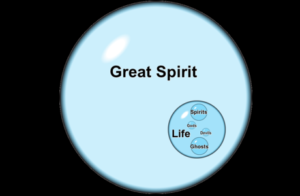


Humans have no consciousness. Consciousness has humans.
The perennial philosophy states that our purpose is to have unitive knowledge of the divine ground . What part does consciousness play in gaining this knowledge?
Only from nothingness experiences can arise without any interference. The only place where truth and reality can be seen.
Seems you guy never stumbled upon Eliam Raell Theory of Nothing on Consciousness
fools
Incredible insight on Relevance Realization. It explains why our social frameworks are failing: we’ve begun 'zeroing in' on ideological differences as relevant, while 'ignoring' the fundamental reality of our shared consciousness. We are filtering out our own humanity to save energy, and it’s creating massive social entropy.
Damn, I should sit down with this professor. The pod caster can't really keep up.
1:47 Just because we are not fully aware of what our conscious is conscious of doesn’t mean that the conscious isn’t conscious of more than we are aware of.
I'm consciously lost , listening to this man, brilliant 😅
so consciousness filters the relevant things by reasoning then all long term memories are stored from that filtered stuff. The subconscious can also run most of the tasks you do but as he said seems to be based on long term memories filtered by consciousness. So you do something repetitively initially slow and conscious after the memories are stored you do it fast and unconscious but under the conscious supervision
Seems a good theory
If we compare to AI we store memories filtered by consciousness and the unconscious uses those memories for fast action. LLM’s come with pre-stored memories using a mathematical optimisation algorithm. But they can also store additional information filtered by the initial optimisation state. So this way AI(ML) works unconsciously because it already has quite a lot of memories and can store additional data but filtered by initial training not by conscious reasoning
ai think AI memory may be similar to instincts. he didn’t mention instincts. So these are like relevant memories that your unconscious can process. for example bees may do all on instincts not being conscious. but they have a working memory that could be populated by the instinctive mechanisms not by conscious reasoning
Ideas well up in your mind; you either act on those ideas or you ignore those ideas.😂
What do you mean by learning? It seems to me that some types of learning can take place without consciousness.
A lachromaria is a single cell that looks for food, and responds to pH changes. I would say it is conscious ,no brain, just a single cell. Consciousness goes hand-in-hand with life, and is instrinsically linked with evolution.
Excelente! …entonces, puedo cambiar mis horizontes de RELEVANCIA? Es eso el maldito DESEO que toda disciplina espiritual quiere dominar? La estructura de la Matrix
6:25 did he just describe chaos?
The host's questions were profound. The guest was very interesting but he answered the questions without answering them at all. The reality answer being, I just don't know.
20W lightbulb.
There’s a difference between consciousness and conscious awareness. Just because you aren’t conscious of all the complex autonomic processes that take place inside your body and mind, it doesn’t mean that “you don’t need consciousness” for those autonomic processes to occur. You don’t have to be aware of something for it be apart of your consciousness.
The brain is an interface, nothing more, nothing less.
Pretending to know something by inventing concepts that you can not explain and no one can understand will send you places.
😂😂😂😂
im kinda confused, so is he saying its from within the brain or is he saying its fundamental?
Consciousness is all there is…
The true purpose of human consciousness is survival. It is our natural survival mode like in the animal world or the other live organism in nature.
you don't have a clue what you're talking about do you ?
Top of what? A mind is potentially the most powerful life support system possible, its power comes form its ability to process information. I think a self-aware 10 year old can get that far.
I wonder what his opinion on consciousness and deep sleep would be because all his explanations refer to the waking state…
Bringing AI into this conversation is a wrong turn. . .that's like comparing a brick to a child. Ai is artificial it speaks its own definition. Not conscious.