
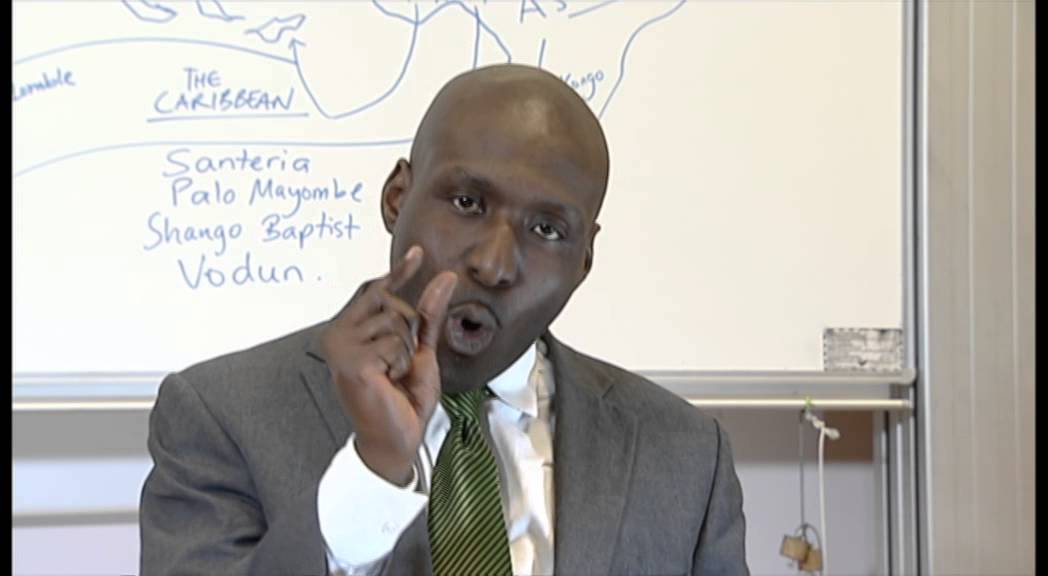
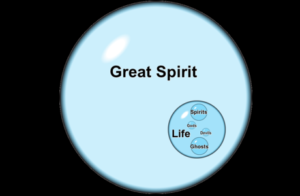
Is there a case for African Spirituality to be recognised in the League of Religions and given the same rights and affordances as other faith systems? This talk outlines common themes within African systems that can serve as pillars for constituting a label of reference, in the same way the term Christianity does for Catholics, Jehovah’s Witnesses and Seventh-Day Adventists or Islam for differing Muslim sects. The pillars presented are the result of academic research done for the film Ancestral Voices 2 and include the African conception of a Creator, Divinities- the forces of nature, Ancestor Reverence and Libation as a prayer form.
source






Wonderful presentation. Ase
Thank you for this most enlightening lecture on African spirituality. I want to know a lot more.
Thank you bro for attempting to restore the humanity of our people
To be fair, how can we expect others to recognise our indigenous cultures (including belief systems, you can't separate both) when we Africans have learned to and continue to actively demonise it.
Thank you. I believe we are moving into a new Afro-renaissance. Where spiritual ancestral energy is leading the way. We have got to heed the call.
Thank you my brother.
we must demand african spirituality
I have just been offered this network as a choice in the last 2 days. I have been mostly viewing Black/ Afrikan videos for 10 years and never were offered this Shanell Johnson as a choice. I have been offered complete nonsense i.e. steve harvey, thats my mama, the jeffersons etc. Nice selection of videos Sister.
Thank you. I have been looking for enlightment regarding African spirituality, and this is VERY helpful
Great content
Beautiful! Very nice and educative presentation.Let's go back to our mode of Celebrating THE ALMIGHTY and stop this blue-eyed JESUS DECEPTION!
You say they believe that Africans don't have a Supreme Being or deity, how are you not know that a believe the African are the Supreme Being, remember in the book The Delectable negro, they used to eat or body parts hoping it would make them like us. Now if someone desires to be like you it could be possible they think you are their deity, is that not possible?.
It's very unfortunate most of our people start calling you weird when you are enlightened like this. ✊🏿
Thank you for this
I love this
I don't believe, this is mine
I would argue that many of our traditional religions are originally polytheistic. There's nothing wrong with that. It seems many people don't like this idea, as if somehow our beliefs are only acceptable if they can be perceived as monotheistic. However this is ultimately open to interpretation. We can't forget that colonialism happened, and with it came foreign religion that left an influence on traditional religions. We'd have to question which belief was indigenous and which one foreign.
It is also highly important for us to identify and preserve the distinction between the different religions/traditions. There is definitely overlap, but they are not the same and shouldn't be handled as if they are. I'm not saying that this is what the lecturer is doing, but I jave noticed many people doing this.
For example, when discussing "African spirituality", most participants are really referring specifically to the traditions of West Africa. They are unaware of, or not well informed in the spiritual systems practiced on the rest of the continent.
We've already seen foreigners throughout history lump African peoples, cultures, languages and religions together as if they're all the same. We can't afford to continue that behaviour.
I am grateful and lucky for this content!
Thank you Shanell!
You have a new subscriber.