

A large study puts two leading theories to the test For a free worksheet, and all the vocabulary and definitions: For more Learning English from the News:
(Photo via Getty Images)
00:00 Introduction
00:42 The story
01:18 Headline 1
03:23 Headline 2
05:32 Headline 3
Your turn: can you use some of the vocabulary and phrases from this programme in a comment? Note: our YouTube channel is a space for everyone to practise their English and learn from each other. Please use English in the comments section
More popular programmes:
Computer made with brain cells
Are artistic brains different?
Morning routine: Phrasal verbs with Georgie
SUBSCRIBE to our YouTube channel for more English videos and podcast English to help you improve your English
Visit our website
Follow us on Instagram
Find us on Facebook
Join us on TikTok
#learnenglish #bbclearningenglish #brain
source









🤩 Click here for a free worksheet, and all the vocabulary and definitions: https://bit.ly/4drOZC1
yo, i say red, you say blue but she want cyan.
Is there no transcript of the video?
Terrific content, im dying for British English vocabulary if i get more vocabulary I'll obtain recognition of British English in order to enjoying chats and conversations. Lots of thanks BBC ❤!
The Liberals came out unscathed under the leadership of the new leader Mr. Mark Carney and they were able to win the federal election at the end of last month.
Great work.
What do 1:08 leading, 3:19 broadcast, 5:34 landmark mean?
A good step further than 6 minutes English programme. It could be even better with some more detail information about the news!
Great
Thank you for informative content
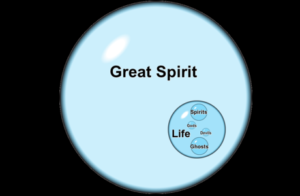
I am a physicist and I explain why current physics leaves not room for the possibility that brain processes can be a sufficient condition for the existence of consciousness. The hypothesis that consciousness emerges from, or can be identified with physical, chemical or biological processes is incompatible with current physics.
It is a scientifically established fact that a mental experience is associated with numerous distinct microscopic physical processes that occur at different points; there is no physical entity that connects all these distinct microscopic processes, therefore the existence of mental experience requires an element of connection that is not described by current physics. This missing element of connection can be identified with what we traditionally refer to as the soul (in my youtube channel you can find a video with more detailed explanations).
Many believe that complex systems (such as the brain) can generate new properties, considered as emergent properties. In reality, I will explain that such emergent properties are only subjective cognitive constructs that depend on the level of abstraction we choose to analyze and describe the system. Since these descriptions are mind-dependent, consciousness, being implied by these cognitive contructs, cannot itself be an emergent property.
Preliminary considerations: the concept of set refers to something that has an intrinsically conceptual and subjective nature and implies the arbitrary choice of determining which elements are to be included in the set; what can exist objectively are only the individual elements. Defining a set is like drawing an imaginary line to separate some elements from others. This line doesn't exist physically; it’s a mental construct. The same applies to sequences of processes—they are abstract concepts created by our minds.
Mental experiences are necessary for the existence of subjectivity/arbitrariness and cognitive constructs; Therefore, mental experience itself cannot be just a cognitive construct.
Obviously we can conceive the concept of consciousness, but the concept of consciousness is not actual consciousness, just as the concept of pain is not the real experience of pain; We can talk about consciousness or about pain, but merely talking about it isn’t the same as experiencing it. (With the word consciousness I do not refer to self-awareness, but to the property of being conscious= having a mental experiences such as sensations, emotions, thoughts, memories and even dreams)
From the above considerations it follows that only indivisible elements may exist objectively and independently of consciousness, and consequently the only logically coherent and significant statement is that consciousness exists as a property of an indivisible element. Furthermore, this indivisible entity must interact globally with brain processes because there is a well-known correlation between brain processes and consciousness. However, this indivisible entity cannot be physical, since according to the laws of physics, there is no physical entity with such properties. The soul is the missing element that interprets globally the distinct elementary physical processes occurring at separate points in the brain as a unified mental experience.
Clarifications
The brain itself doesn't exist objectively as a mind-independent entity. The concept of the brain is based on separating a group of particles from everything else, which is a subjective process, not dictated purely by the laws of physics. Actually there is a continuous exchange of molecules with the blood and when and how such molecules start and stop being part of the brain is decided arbitrarily. An example may clarify this point: the concept of nation. Nation is not a physical entity and does not refer to a mind-independent entity because it is just a set of people chosen on the basis of arbitrarily established criteria. The same goes for the brain.
Brain processes consist of many parallel sequences of ordinary elementary physical processes occurring at separate points. There is no direct connection between the separate points in the brain and such connections are just a subjective abstractions used to approximately describe sequences of many distinct physical processes. Indeed, considering consciousness as a property of an entire sequence of elementary processes implies the arbitrary definition of the entire sequence; the entire sequence as a whole (and therefore every function/property/capacity attributed to the brain) is a subjective abstraction that does not refer to any mind-independendent reality.
Physicalism/naturalism is based on the belief that consciousness is an emergent property of the brain. However, an emergent property is defined as a property that is possessed by a set of elements that its individual components do not possess; my arguments prove that this definition implies that emergent properties are only subjective cognitive constructs and therefore, consciousness cannot be an emergent property. Actually, emergent properties are just simplified and approximate descriptions or subjective classifications of underlying physical processes or properties, which are described directly by the fundamental laws of physics alone, without involving any emergent properties (arbitrariness/subjectivity is involved when more than one option/description is possible). An approximate description is only an abstract idea, and no actual entity exists per se corresponding to that approximate description, simply because an actual entity is exactly what it is and not an approximation of itself. What physically exists are the underlying physical processes. Emergence is nothing more than a cognitive construct that is applied to physical phenomena, and cognition itself can only come from a mind; thus emergence can never explain mental experience as, by itself, it implies mental experience.
Conclusions
My approach is based on scientific knowledge of the brain's physical processes. My arguments show that physicalism is incompatible with the very foundations of scientific knowledge because current scientific understanding of molecular processes excludes the possibility that brain processes alone can be a sufficient condition for the existence of consciousness.
An indivisible non-physical element must exist as a necessary condition for the existence of consciousness because mental experiences are linked to many distinct physical processes occurring at different points; it is therefore necessary for all these distinct processes to be interpreted collectively by a mind-independent element, and a mind-independent element can only be intrinsically indivisible because it cannot depend on subjectivity. This indivisible element cannot be physical because the laws of physics do not describe any physical entity with the required properties.
Marco Biagini
Thx for the useful video!
Great Work … Thanks 👍😊👍
This is ridiculous. Anyone who prays and meditated know
Thank you
❤❤❤❤❤
🧠 So both theories got roasted and consciousness still remains a mystery… Classic science move 😂
face off: about to fight
ref: referee
pseudoscience:疑似科学
unscathed: without damage, injuries
scathing: strong attack
The idea of consciousness being distributed rather than localized is compelling. What are the implications of this for brain injury research?
❤❤❤
Thanks Georgie and Neil. A very complex subject with references to the brain. It's a mystery to me why our brain register bad experiencies and it's so difficult to forget them, or learn to reverse those experiences into positive ones. Not sure I'm making sense, but I wish scientists came up with good ideas about how the brain works. I mostly understand your lessons, and it's a pleasure to listening to you.
BBC learning English the best channel ❤
great video. it's in the Right-DLPFC(mainly).. it is the PFC related / executively processed engrams and related processing/ces. Thank You. 🦍🥐🥐⚡⚡🧬🔬🧈🍒🍒😜🍐🍔🫏 It inwolive' the 4 lobes in varying degrees in time, but is primarily acknowledged as existing = consciousness in the rDLPFC. –with the specifics the area's in the DLPFC/s (R/L) – the main thought processing area of the brain. The DLPFC is crucial for organizing and controlling conscious experience, but not its sole source. so you need the occipital lobe for vision processing as well as the BA-19 regions, Parietal lobe, temporal lobe usually, and the PFC.The DLPFC (especially the right side) is crucial for organizing and controlling conscious experience, but consciousness is a whole-brain phenomenon requiring all four lobes and more. The occipital lobe handles vision, parietal lobe spatial awareness, temporal lobe memory and language, and the PFC executive control and conscious access "I am The Interceptor!"
Today, the human brain:
1.) weighs, on average between males and females, about 1300g
2.) has ~7g of microplastic buildup
3.) is ~90% glial, or supporting cells, for neurons. Of those glial cells, about 70% of those are special fat cells (oligodendocytes)
4.) The remaining 10% of cells are the neurons
5.) Of all the brain's neurons, 90% are found in the tightly-knit cerebellum. So your cortex only contains ~3% of all the neural concentration of the brain.
Pretty crazy to think about.
Thank you.
In the case of donald trump… it's in his nappy!
Last week, My football team faced off with other teams in a regional tournament. They were surprisingly strong. My team was totally taken a beating. One of my teammate was hit in the back. Luckily, she was unscathed after a checkup with medical team.
Fantastic 😊❤
This is so helpful! I make short English listening lessons too.
Outstanding ❤
Are we still trying to locate consciousness in the brain? 😂
Informative as always! 👏😍
Very good
Engaging topic. Imho almost all of "consciousness" overlaps with parrotness. Descartes, with his "cogito ergo sum", is to blame for the illusion of introspection. A pastry shop here – Ve, with pigeons specialized in pastry crumbs fluttering around. Been observing them. It seemed the pigeons thought they needed to eat pastry crumbs, some of them had feeling of being ready to form couples and were decanting dance poetry, some of them had the sensation there were too many boorish humans around drinking their stupid spritz, and some of them ran away having memory of a lady serving other kind of crumbs at fixed time out of her window.
Science: where is it in the brain? — I wonder why they do not start from there, since that it will give a proof of introspective consciousness / awareness.
0:40