
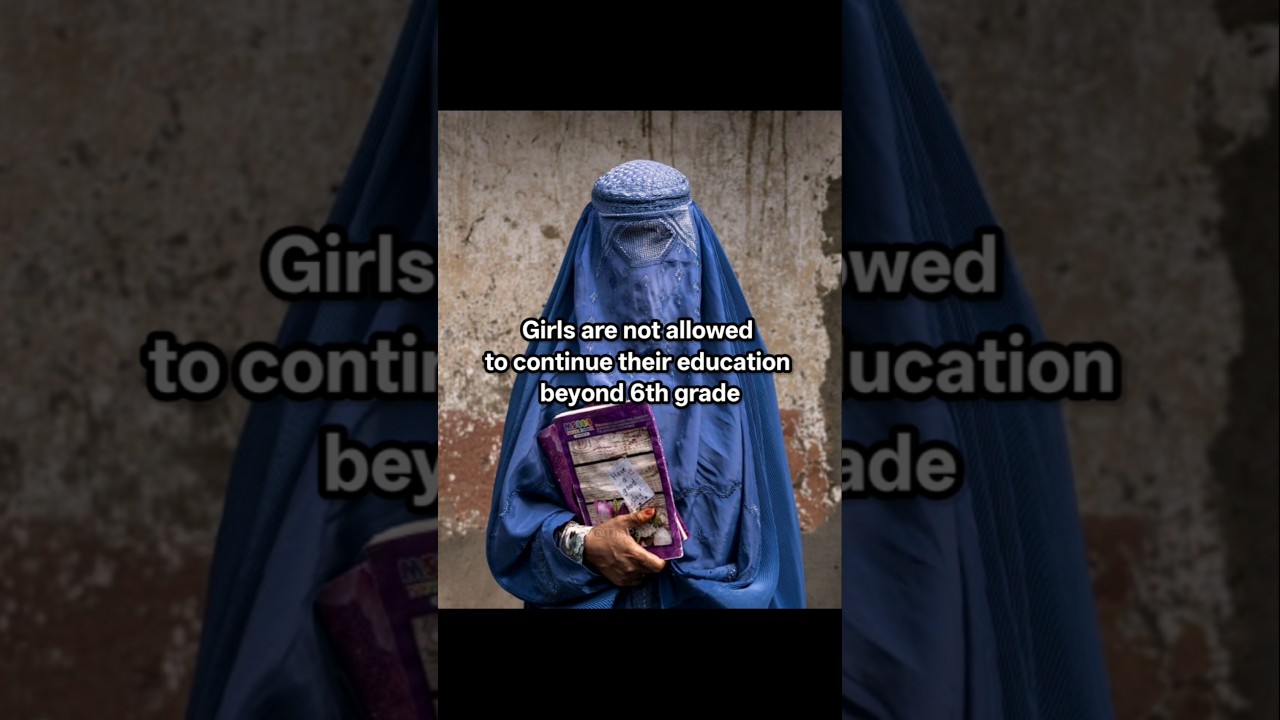
Life as a Woman in Afghanistan Today #taliban #afghanistan #humanity #women #shorts
What is life like for women in Afghanistan today? In recent years, many restrictions have been placed on education, employment, public participation, and personal freedoms. For countless women and girls, opportunities that were once available have become increasingly limited.
This video explores some of the challenges Afghan women face every day, from restrictions on education and work to limits on their public presence. Their experiences have become the focus of global discussions about human rights, freedom, and equality.
Behind every statistic is a real person with dreams, ambitions, and a desire for a better future. Understanding these stories helps us better understand the realities faced by millions of women today.
#afghanistan #women #afghanwomen #humanrights #freedom #education #girlseducation #womenrights #worldnews #history #facts #interestingfacts #documentary #storytelling #shorts #ytshorts #learnsomethingnew #awareness #society #culture #fyp #islam #visualstorytelling #viral #trending #stories #story #humanrights #womenempowerment #motivation #pain
source



English Common law allowed the same until quite recently
This makes me sick to my stomach that the taliban still haven’t matured to realize all genders are equal women are not slaves 💙💙💙💙💙💙💙💙💙💙💙💙💙💙💙💙💙💙💙💙💙💙💙💜💜💜💜💜💜💜💜💜
Thats horrible🥀
Curious why men dont comment on this.
Whats the point of women existing in that country if they can't be seen and do anything, omfg I hate humans this world is so cruel why
This is beyond terrific , this is not our beautiful religion that they are trying to destroy and it never was and will never be!
This genuinely made me twitch
As someone who is afghan this is really sad to watch
Well they don’t have xray vision so that badicallly means men can beat their wives as much as they wsnt
Every day the world keeps descending more and more into darkness😢
Talliban fuck u alr
They disrespect girls and women why women give birth to u but ik man put the baby inside them but it's still bad
Thats just abuse and women aren't TOYS. They are HUMAN BEINGS.
So proud to have compassion for these women , but how about compassion for the 250,000 British girls groomed by the Muslim men. This women in their burkas helped the groomers to assault and traffick the girls.
Voila ce que fait la religion !! Paix et amour mais pour qui
Damn even North Korea is nicer than Afghanistan 🇦🇫
No women is free if they aren't.
The Afghan president is a bad bro literally so baf
Yk what just send their women to other countries and let them live, they clearly despise them . Just men in their country as they wish. Enjoy.
So Fucken What!…..
This Is What They Wanted!…
Now north korea is better than afghanistan 🥲
That's so wrong 🙅♀️
Why are you posting false info I've toured Afghanistan as an American women have all the same rights