The very idea of “African Spirituality” can feel like trying to grasp a mirage. Africa is a continent vast and diverse, not a monolithic entity. Yet, from the ancient traditions of Egypt to the vibrant rituals of the Zulu, or the intricate cosmologies of the Yoruba, there are threads of interconnectedness that weave through the spiritual landscapes of this incredible continent. So, what exactly is African Spirituality? It’s a deeply rich and multifaceted tapestry, far removed from simple dogma and instead embracing a holistic, life-affirming worldview.
Instead of a single doctrine shared by all 54 countries, African Spirituality is more accurately described as a spectrum of interconnected belief systems and practices that emerged and evolved over millennia across the African continent. These systems share core principles, even as they manifest in unique and localized ways.
Here are some of the fundamental pillars that often define what we understand as African Spirituality:
1. The Centrality of Ancestors:
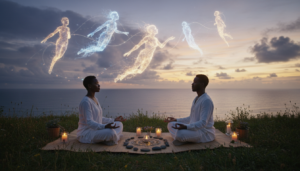
Perhaps the most pervasive and defining element is the profound reverence for ancestors. In many African spiritual traditions, ancestors are not simply departed loved ones but active participants in the lives of the living. They are seen as intermediaries between the human realm and the divine, offering guidance, protection, and wisdom.
* Their role is not passive: People often offer libations (pouring of liquids like water or alcohol), prayers, and sacrifices to honor and commune with their ancestors.
* They are a bridge: They are believed to be able to influence events in the physical world and are consulted in times of crisis, decision-making, and celebration.
* Connection across generations: This belief fosters a strong sense of lineage, community, and responsibility, connecting the past, present, and future.
2. Immanence of the Divine and the Natural World:
Unlike some Western religions that posit a distant, transcendent God, African Spirituality often views the divine as immanent – present within the natural world. The earth, sky, water, plants, and animals are seen as imbued with spiritual energy and often considered sacred.
* Nature as a temple: Sacred groves, rivers, mountains, and specific trees are revered as places of worship and connection to the spirit world.
* Life force (often referred to as Ashe, Akala, or similar concepts depending on the culture): A vital energy flows through all things, connecting the divine, the human, and the natural. Understanding and aligning with this force is crucial for well-being.
* Respect for creation: This inherent respect translates into a deeply ecological worldview, emphasizing balance and sustainability.
3. A Hierarchical and Interconnected Cosmos:
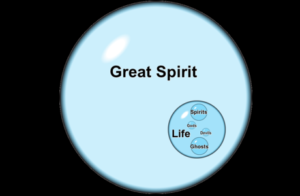
African cosmologies often describe a structured universe with various levels of spiritual beings.
* The Supreme Being: While often acknowledging a distant, all-powerful creator, the focus is more on the spiritual interactions within the tangible world.
* Orishas, Lwa, or Abosom: These are divine intermediaries, often described as manifestations of the Supreme Being’s attributes or primal forces. They govern aspects of life like love, justice, creativity, and wisdom. Importantly, these are not “gods” in the Abrahamic sense but rather powerful forces or spirits that can be invoked and worked with.
* Spirits of nature and place: From water spirits to forest dwellers, the natural world is populated by a multitude of entities.
* Humans and their roles: Humans occupy a significant place within this cosmic order, tasked with maintaining balance and harmony through their actions and rituals.
4. The Importance of Ritual and Community:
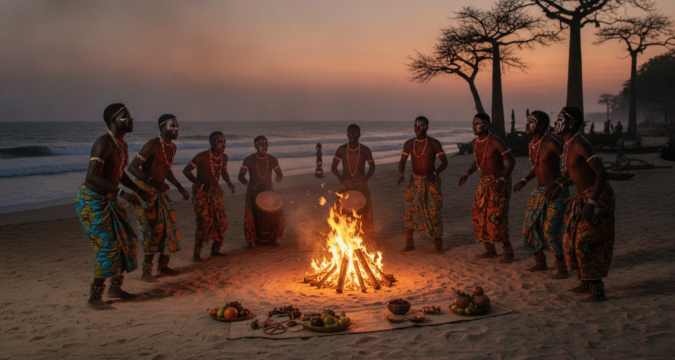
African Spirituality is not a faith of individualistic belief but one deeply rooted in community and shared practice. Rituals are the vibrant threads that bind individuals to their ancestors, the divine, and their communities.
* Celebration and commemoration: Rituals mark life’s passages – birth, puberty, marriage, death – and celebrate harvests, good fortune, and the changing seasons.
* Healing and seeking balance: Rituals and ceremonies are often employed to address illness, discord, and spiritual imbalances.
* Oral traditions and knowledge transmission: Stories, songs, proverbs, and dances are vital vehicles for transmitting spiritual knowledge, ethical teachings, and historical narratives.
5. Dynamic and Adaptive:
It’s crucial to understand that African Spirituality is not static. It has historically been a dynamic and adaptive force, evolving and incorporating new influences while retaining its core essence. This has also meant adapting to the challenges of colonialism and the imposition of foreign religions, often leading to syncretic forms of spirituality.
Moving Beyond Stereotypes:
Often, complex African spiritual traditions are over-simplified or misconstrued through a Western lens, sometimes being labeled as “witchcraft” or primitive animism. This is a gross misrepresentation. African Spirituality offers a sophisticated, holistic, and deeply meaningful way of understanding existence, our place within it, and our interconnectedness with all life.
In essence, African Spirituality is a celebration of life in its entirety. It’s about honoring the past, living fully in the present, and striving for a balanced future, all guided by the wisdom of ancestors and the pervasive pulse of the divine within the world around us. To truly understand it, we must approach it with an open heart and a willingness to learn from its profound and enduring wisdom.