
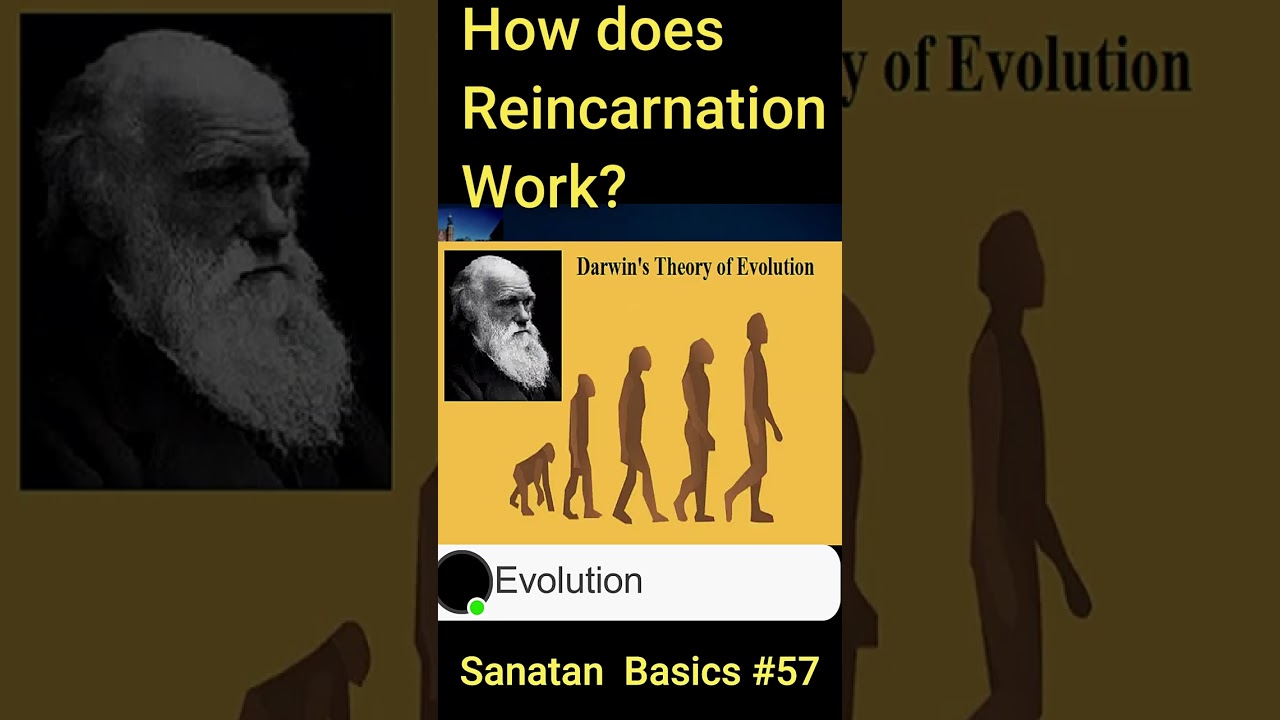
#HinduAcademy #JayLakhani #sanatan #reincarnation #sanatanbasics55
Visit: for more information. Join our Whatsapp Broadcast Group by sending a Whatsapp message to: +447459531967 or click this link:
Hindu Academy aims to promote a Comprehensive and Rational vision of Hinduism incorporating ideas of Religious Pluralism, Spiritual Humanism, and resonance between Science and Spirituality. It operates with the education establishments by working with schools colleges and universities as well as in the mainstream media.
The role and relevance of Hinduism in contemporary society
Hinduism has a great deal to contribute towards the spiritual health of the modern world. Its inherent pluralistic teachings offer the best resolution to how people of different religions can co-exist peacefully in a multi-faith society. Hinduism even allows for spirituality to be explored in non-religious modes, making teachings relevant and interesting for the youth of today. Family values promoted by Hinduism can foster more stable family units and better community cohesion. The reconciliation between the truth claims of a science-oriented worldview and a religiously oriented worldview is obligatory in this century. The Hindu Academy invokes findings at the cutting edge of modern sciences to promote this reconciliation.
In Hinduism, reincarnation is a core belief that is deeply rooted in its spiritual teachings. The concept revolves around the idea of the soul (Atman), which is considered eternal and indestructible. According to Hindu philosophy, the soul does not die with the physical body; it simply moves on to inhabit a new body after death. This continuous cycle of birth, death, and rebirth is known as samsara.
The soul’s journey through reincarnation is influenced by karma, the law of cause and effect. Karma dictates that every action, thought, or deed has consequences, which affect the soul’s future lives. Good actions (positive karma) lead to better circumstances in future lives, while negative actions (bad karma) result in less favorable conditions. Thus, the soul evolves and learns through each lifetime, gradually moving toward spiritual growth.
The ultimate goal in Hinduism is to achieve moksha, or liberation from samsara. Moksha represents freedom from the cycle of reincarnation, where the soul realizes its true nature as part of Brahman, the supreme, formless, and infinite reality. To attain moksha, the soul must transcend the cycle of birth and death by eliminating desires, ego, and ignorance. This is achieved through spiritual practices such as meditation, devotion (bhakti), knowledge (jnana), and righteous living (dharma).
Each lifetime in Hinduism is viewed as an opportunity for the soul to work through past karma, learn valuable lessons, and grow spiritually. The process of reincarnation allows the soul to gradually purify itself, gaining wisdom and becoming closer to Brahman. This belief encourages individuals to live ethically, as their actions in this life influence their future lives.
Dharma, or the moral duties and responsibilities that each person must follow, plays a significant role in the process of reincarnation. Dharma varies based on one’s age, caste, and stage of life, but it is essential for spiritual progress. By living in accordance with dharma, individuals accumulate good karma, which positively affects their future lives. Conversely, failing to follow dharma results in negative karma and less favorable reincarnations.
The belief in reincarnation influences many aspects of Hindu culture and religious practices. It encourages individuals to live with compassion, integrity, and mindfulness, understanding that their actions have long-term consequences. It also fosters a sense of spiritual responsibility, as followers of Hinduism seek to align their lives with dharma and ultimately achieve moksha.
Reincarnation in Hinduism is not just a belief in the continuation of life but a profound understanding of the soul’s eternal journey. It emphasizes the importance of moral living, spiritual development, and the pursuit of divine unity.
Please Like and Share our videos and subscribe to our YouTube Channel:
You can also join the conversation on our social media channels:
Facebook:
Linkedin:
Twitter:
Join over 25,000 other students on our free ‘Basics of Hinduism’ course, which you can access here:
-~-~~-~~~-~~-~-
Please watch: “How to reconcile Dvaita with Advaita ?”
-~-~~-~~~-~~-~-
#hinduism #jaylakhani #hinduacademy
#JayLakhani #HinduismExplained #HinduAcademy
source





Reincarnation is real. However, we do not reincarnate as animals in animal bodies. When some scriptures mention reincarnating as ants, they are referring to adopting the qualities of ants—such as their industrious nature and focus on building. If someone spends many lifetimes engaging in similar activities, they are metaphorically like ants in their approach. This is the intended meaning. Furthermore, reincarnation ends when one becomes fully enlightened (merges with the Divine or Absolute).
recarnation is just hindu believe, wen every soul shall go to God , how can diff bodies with one soul be ressurected, every soul has its account
recarnation only happens wen God wants to send a message to us but doesnt happen every life for humans
Greeks and Hindus assumed it two thousand years ago…you are in 2024. Just trying to fool us
Reincarnation is a fact which only hinduism prescribes.
total fake
Then how is the no increasing ? From where the extra souls are coming?
Reality is scary so keep making stupid stories.
Nope, just mythology and fantasy. We die and our souls wait for judgement day, until then, either you suffer or are in a good state and on the day of judgement, you go to hell or haven for eternity.
Total Bullshit…
Just using some scientific terms and a good English people can easily fool us and promote their religious agenda….
Reincarnation is the hypothesis not the proven fact. It is your thought sir, not the actual body transformation.
There is a problem here because according to him each reincarnation we evolve into something cmore complex.So if a man lives a bad life what higher being can he become. A cattle or what?
The true word of God states that once we die our soul stands before God our creater.