
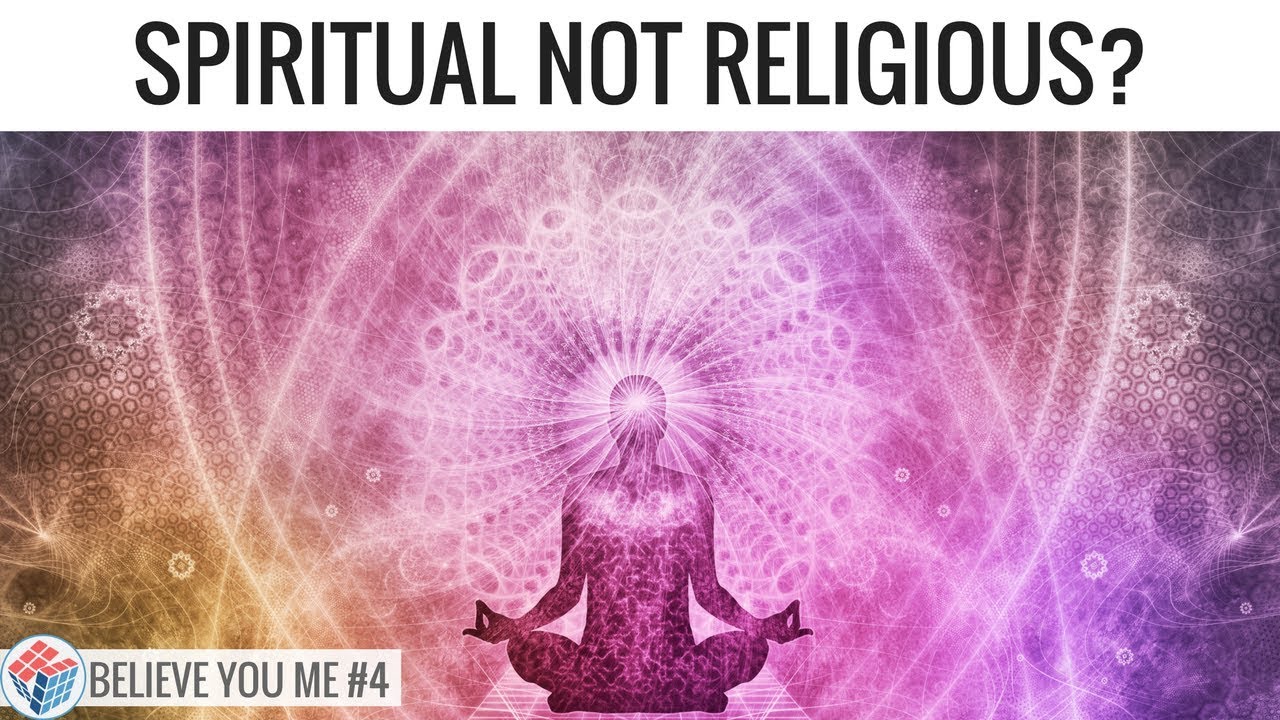
BELIEVE YOU ME! A talk show where Ahmadi Muslims discuss atheism and the existence of God! In this episode we ask whether you can be spiritual but NOT religious… (More )
—————————————
Keep the discussion going by commenting below, and subscribe to see more episodes of Believe You Me!
—————————————
Rational Religion: Making Sense of Spirituality
FOLLOW US ON SOCIAL MEDIA!
You can get in touch at contact@rationalreligion.co.uk or by tweeting us @RRanswers.
—————————————
LEARN MORE ABOUT ISLAM AHMADIYYA HERE:
Intro & Beliefs:
Intl.: &
UK:
USA:
Canada:
Arab World:
Australia:
New Zealand:
India:
—————————————
Your hosts are brothers Tahir & Umar Nasser: two British junior doctors working in the UK.
Tahir Nasser @tahirnasser:
Umar Nasser @UmarN91
—————————————
source











i am just curious how do i know that mirza ghulam ahmad send by god?
and did he received new quran from god or word of god?
brilliant video 5/5
I do agree with a lot of what you dashing young doctors had to say here. Yes Umar, your disciplined ability to resist chocolates was obvious from your slender frame. And that was a great example: discipline and structure do get results.
On a more serious note, the suggestion that people don't want to "put in the work" is what I disagree with. Personally, I thrived on the do's and don'ts, without taking them to an excess. Many of us thrive on structure and that obedience coincides with avoiding decision fatigue. Constraints can certainly be liberating.
People like myself left religion–and that includes Ahmadiyya Islam–because the truth claims didn't add up (for us). People do crave a 'spiritual' connection (whether to fellow man and/or to the mysterious unknown). I suspect many people are really deists. It's the "revealed" religions that have let them down.
If a person follows the Ahmadiyya Muslim recipe (or advice) for finding God through prayer, and is in contact with Ahmadi Muslims, they are more likely to induce that this "God" wants them to be an Ahmadi Muslim. If they did this same exercise at the prompting of evangelical Baptist Christians, Jesus would be the one speaking to them, and they would then join that particular flavor of Christianity.
What do people do who see through these biases? They drop organized religion and live as best as they can, with lives filled with their own goals but also with that of contribution.
If deism is in fact a more accurate representation of reality than classical theism, the looking for a "revealed" religion as the vessel to practice and hone spirituality is a red herring. Again, we come back to the most rational course of action being this: to use reason to identify the religious claims that make the most sense (if any), and then if in fact such claims make overwhelming sense, to pray on that.
If none of them make sense, then the rational thing to do is to drop the classical theism assumption from one's worldview of what spirituality is. It's still just as beautiful and just as inspiring. No scriptural contradictions with science or troubling/ambiguous moral prescriptions to wrestle with. Giving oneself a structure and road map for spirituality is a red herring if it comes from a religion that does not in fact, stand up to scrutiny. I think you might agree.
That's why establishing the veracity of a religion's claims is always the most important first step.
I've expanded my comments in a short blog post, here: http://reasononfaith.com/on-spiritual-but-not-religious/. In this post, I also touch on the prayer prescription.
Great video! Subscribed.
I came from a Sunni Muslim family and a few years ago I sorta left it and consider myself an agnostic and nihilist ever since, then came a period of personal turmoil where I started to feel the need of finding some sort of spirituality just to feel a greater connection to the world. I researched Buddhism, Taoism, and Stoicism and so far I've considered those as great philosophies to follow and practice.
What I've found lacking from Islam is how much of it seem to get watered down from its essences, from what I've seen around me its followers seem to constantly worrying on "wordly" stuff instead of the more spiritual stuff. Like how they try to meddle into politics, social rule, forcing people to follow their own interpretations while shunning different strands with different interpretations from them. At some point I can see the point of shalat and surrendering everything to God that is inherently the essence of Islam, but the way it is perpetuated in society is just so far from that so I've grown to dislike it. What Muslims seem to perpetuate so far is just for people to follow whatever it is the mainstream Islamic masses are doing and stop thinking critically or they'll grow doubts and shirks.
What I like about Eastern philosophies/religion and Stoicism is their emphasis for each people to find a personal spiritual fulfillment and to experience it for themselves. They care less about whether people actually follow their "exact interpretation" or not and more lenient on people integrating different ideas to the basic teachings which suit their personal fulfillment. Taken into the glass and water analogy, they care more about the "water inside" and its quality compared to the shape of jugs/glasses in which people drink it from, while in Abrahamic faiths all I see is how strict they are in dictating the shape of the water container without caring the actual substances that people actually drink! At least the mainstream face is like that.
Thank you so much for this. I had the same argument with someone that said they are spiritual but not religious and saying how religion is not necessary as long as you are spiritual because religion doesn't really do anything for them. I always recommend the beautiful book from the our beloved promise messiah about the philosophy of the teachings of Islam that explains beautifully what the purpose of life is and why we are here.
I'm going to send it to a lot of people for tabligh purposes and that people can benefit from it.
Love the connection between emotion and body language, wish you went a little further on it, specifically whether the action inherently elicits an emotional response or whether the mind has been trained to trigger that emotion whenever that action is being performed, those are two wildly differing things and personally I believe prayer belongs in the latter.
I am perfectly happy to be held accountable. My soul's journey is determined by my thoughts, behaviour and my learning/development in this life and all previous lives. The decisions I make in this life will help to determine my opportunities for choice in my next life. This is what I call my spirituality. I have no organised religion and my parents were irreligious. Despite this, I have from early days, believed that I have connections beyond the material/tangible world. I kind of assume we all do, at least until a certain developmental stage when we can be taught into it or out of it or left alone to make up our own mind as I was.
Great video. Much needed in today's day and age!
I really love this video!
I think spirituality is an attempt to progress from belief systems that are 1000s of years old.. Plenty of crazy and sane religious and spiritual"new agey" people
Erm no… Spirituality for me isn't anything to do with comfort. Its more to do with trying to make sense of the many unusual experiences I've had that neither science nor religion can explain sufficiently.
Religion is like stop lights set randomly across a highway, it creates utter chaos. Look at the most religious countries of the world today, chaos resides there.
caro shirt is evil
Great videos brothers! I am so thankful for your videos, keep up the good work, may Allah bless you.
Of course you can be committed to being spiritual without being religious. You can pray without being religious, you can have a connection with God and communicate with God without being religious. You can have spiritual discipline and morality without being religious. You can have faith without being religious. Society can have moral accountability without religion.